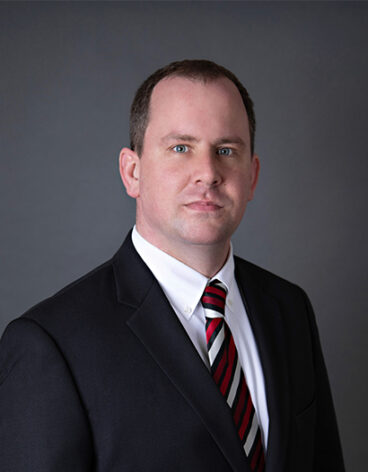
The Rural County Representatives of California (RCRC) is sponsoring Assembly Bill 240 (Alanis). This measure would require the Little Hoover Commission to conduct a study evaluating the educational needs and opportunities that exist for the five rural counties that are not included in a California Community College (CCC) district. In 2024, an earlier version of this legislation
U.S. House Leadership is Urged to Reauthorize the Secure Rural Schools (SRS) Program
On January 16th, Representative Marie Gluesenkamp Perez (D-WA-03) sent a letter urging House Leadership to immediately prioritize a three-year extension of the Secure Rural Schools (SRS) program. The SRS program provides vital funding to address school and infrastructure needs in rural communities that are highly impacted by federal lands and historically relied on timber revenue from those lands.
Last Spring, the final authorized SRS payment was made. Reauthorization was introduced in both chambers of Congress in late July 2023 but was not passed in the 118th Congress. The House bill (H.R. 5030) went nowhere after being referred to committee in the fall of 2023, despite having more than six dozen co-sponsors by the end of 2024…
State Abandons Electric Fleet Rule, Implications for Local Governments Unclear
Earlier this week, California Air Resources Board (CARB) Chair Liane Randolph announced that the agency is abandoning its quest for a federal Clean Air Act waiver from the U.S. Environmental Protection Agency (EPA) to enact regulations adopted in 2023. This regulatory approach would have mandated
U.S. Senator Padilla Announces Over $258 Million for California Transportation Infrastructure Projects
U.S. Department of Transportation (DOT) will award 25 California projects a combined $258 million for transportation infrastructure upgrades…
TORCH Act Introduced to Promote Healthy Forest Management
On January 3, the first day of the 119th Congress, Representative Doug LaMalfa (R-Butte) introduced the Targeted Operations to Remove Catastrophic Hazards (TORCH) Act, which aims to reduce wildfire risk and improve forest health…
Bipartisan California Congressional Delegation Applauds President Biden’s Major Disaster Declaration for Los Angeles County Fires
On January 8, California’s U.S. Senators Alex Padilla and Adam Schiff led 47 bipartisan members of the California Congressional delegation in urging President Biden to grant Governor Gavin Newsom’s request for a major disaster declaration…
RCRC Shares Perspective on Opportunities for State Permit Reform
On December 23, RCRC submitted extensive comments to the Assembly Select Committee on Permitting Reform, including several suggestions to improve the California Environmental Quality Act…
U.S. Forest Service Withdraws “Old Growth” Proposal
On Tuesday, the USDA Forest Service (USFS) announced the withdrawal of the notice of intent (NOI) to prepare an environmental impact statement (EIS) for the National Old Growth Amendment, which was first released in draft form in June 2024…
RCRC’s Rural Rundown of Governor Newsom’s 2025-26 Proposed Budget
On Friday, January 10th, Governor Newsom released his Administration’s 2025-26 Proposed Budget. This proposal begins the budget development process between the Governor and Legislature; with the onus on lawmakers who must pass a budget by June 15th for the July 1st start of the 2025-26 fiscal year.  RCRC’s Rural Rundown captures highlights of the proposal as it relates to RCRC member counties…
RCRC Celebrates 2025 Officers and Honors Rural Leadership Award Recipients
RCRC gathered at its annual reception on Wednesday, January 8th, to celebrate the RCRC 2025 Officers and to honor the recipients of the 2024 Rural Leadership Awards. The Rural Leadership Awards are presented to two public officials who have demonstrated an...
Special Feature! Artificial Intelligence in Rural California Counties: Practical Steps for Leaders
Today Artificial intelligence (AI) tools are no longer just futuristic concepts—they are reshaping how local governments operate. From theoretical ideas to practical solutions, tools like ChatGPT are enabling more efficient, impactful public service delivery. In this special feature to the Barbed Wire, Nevada County Information & General Services Agency Director, Steve Monaghan, explores actionable ways to adopt AI, best practices for implementation, and critical considerations for local elected officials.
A Special Feature of the Barbed Wire Newsletter – December 20, 2024 Edition
GSCA – December 2024 Update
RCRC-affiliated entity Golden State Connect Authority (GSCA) has reached a significant milestone, receiving its first complete Low-Level Design package for the city of Gonzales in Monterey County. This package, developed using LATA Grant funding from the California Public Utilities Commission, will serve as a valuable resource when planning future broadband infrastructure initiatives. This accomplishment marks a crucial step forward in GSCA’s efforts to expand broadband access and connectivity across the state.
ESJPA – December 2024 Update
The Rural Counties’ Environmental Services Joint Powers Authority honored outgoing Chair, Siskiyou County Supervisor Michael Kobseff. Supervisor Kobseff has served as ESJPA’s Chair since 2013 and has guided the organization through several new mandates and initiatives, including SB 1383 organics recycling mandates and SB 54 single-use plastic regulations. Supervisor Kobseff is stepping down from the Chair position in anticipation of his retirement from the Siskiyou County Board of Supervisors at the end of 2026. ESJPA elected long-time Vice Chair Supervisor Lori Parlin, El Dorado County, as the new Chair for 2025 and Supervisor Rhonda Duggan, Mono County, as Vice Chair.
California Representative Huffman Named Ranking Member of House Natural Resources Committee
On December 17th, Representative Jared Huffman (D-Del Norte) was announced as Ranking Member of the House Natural Resources Committee for the 119th Congress…
Government Funding Package Defeated in U.S. House of Representatives Thursday Night
On Tuesday afternoon, December 17th, House Republicans released H.R. 10445, a continuing resolution aimed at averting a government shutdown, but the plan quickly unraveled due to opposition from Elon Musk and President-elect Donald Trump. The saga continued into the late hours of Thursday night…
RCRC Presents President’s Award to Tedd Ward of the Del Norte Solid Waste Management Authority
On December 12, 2024, RCRC honored Tedd Ward, Director of the Del Norte Solid Waste Management Authority, with the RCRC President’s Award. RCRC’s President & CEO Patrick Blacklock presented Mr. Ward with the award…
Feedback Requested to Inform Toolkit for Local Renewable Energy Permitting
The Governor’s Office of Business and Economic Development (GO-Biz) is seeking input from community members, developers, and local permitting agencies on the challenges associated with permitting large-scale renewable energy projects. Take the survey today.
Adam Schiff Sworn in as California’s Newest U.S. Senator
Senator Butler did not seek to retain her seat in the November 2024 election. Instead, once the election was certified, Senator Butler stepped down, allowing California’s Senator-elect Adam Schiff to assume the office and complete the term…
State Finalizes New Property Insurance Ratemaking Regulations
On December 13th, California Insurance Commissioner Ricardo Lara announced that the State had approved the final version of his proposed regulations on catastrophe modeling for insurance ratemaking, which are now in effect.
RCRC Discusses Challenges of Household Hazardous Waste Management at National Product Manufacturers’ Convention
On December 9th, RCRC’s John Kennedy was invited to discuss the costs and challenges of managing household hazardous waste (HHW) at the Household and Commercial Product Association’s annual meeting in Fort Lauderdale, Florida…
DOI Local Government Wildfire Vehicle Conversion Grants Now Available
On December 4th, the U.S. Department of the Interior (DOI) announced $20 million in available grant funds for local governments to strengthen their response to wildfire by converting vehicles to wildland fire engines. The funding can be used by local governments that...
U.S. House Approves Water Resources Development Act
On December 10, 2024, the House approved, by a vote of 399-18, the Water Resources Development Act (WRDA) (S. 4367), which would improve the nation’s ports and harbors, inland waterway navigation, flood and storm protection, and other aspects of the nation’s water resources infrastructure…
California Payment In Lieu of Taxes (PILT) Q&A
Frequently asked questions about California Payment in Lieu of Taxes (PILT)
SGMA Implementation
Groundwater management law in California previously authorized certain local agencies to adopt and implement a groundwater management plan. Local agencies seeking state funds from the Department of Water Resources (DWR) for groundwater projects and groundwater quality projects were required to prepare and implement a groundwater management plan that included basin management objectives.
Secure Rural Schools
Adopted in 1906, federal law requires the U.S. Forest Service to provide counties and schools with 25 percent of the revenues generated on federal forest lands from a variety of activities including timber harvesting, mining, and recreational activities. In 2000, Congress enacted the Secure Rural Schools & Community Self-Determination Act (SRS) to provide funding for rural counties and school districts to replace revenue from dwindling forest receipts due to a national decline in timber harvesting.
Endangered Species Act (ESA)
The Federal Endangered Species Act (FESA) was passed by Congress in 1973 to protect and recover at risk species and the ecosystems upon which they depend. In 1984, California followed when the Legislature passed the California Endangered Species Act (CESA), the provisions of which were designed to mirror the FESA.
Both Federal and State ESAs offer special protections to wildlife and plants deemed in danger of extinction by both the U.S. Fish & Wildlife Service (USFWS) and the California Department of Fish & Wildlife (CDFW). At times, those protections can prevent the development of rural economies through restrictions on critical habitat that slow or halt recreational use and development. The USFWS has proposed several amendments to the FESA to reform the way species listings account for economic impacts and other important criteria.
RCRC actively engages in the rulemaking processes which list specific species as endangered when they impact RCRC member counties. RCRC also regularly works to ensure that proposed changes to critical habitat regulations will have minimal impact on development and tourism in rural communities.
Wildlife Policy Areas Affecting Local Government
The California Department of Fish and Wildlife (DFW) and the United States Fish and Wildlife Service (USFWS) are the two primary agencies responsible for fish and wildlife issues impacting rural counties and their citizens.
Water: Supply and Demand
Nearly 75 percent of California’s available water originates in the northern one-third of the state (north of Sacramento), while more than 70 percent of the demand occurs in the southern two-thirds of the state and coastal areas. Much of the available runoff eventually flows into the Sacramento and San Joaquin Rivers, both of which flow through the Central Valley and meet in the Sacramento-San Joaquin Bay-Delta (Delta). The Delta is the heart of the state’s surface water delivery system. In any given hydrological year, the state’s water supply can be affected by circumstances from extreme drought to flooding. California’s unpredictable climate has led the state to invest in one of the most sophisticated water delivery and flood management systems in the world so this crucial resource can be made available to the communities, industries, habitats, and farms it supports.
About Rural Transportation
California’s State and local transportation infrastructure is a complex system of interstate and intrastate highways, freeways, and city and county-maintained streets and roads. California’s rural transportation system serves to connect rural and remote communities to employment and population centers, health care and social services, and educational opportunities, and provides the general public access to many of California’s recreational opportunities and tourist attractions – two key economic drivers for rural counties.
About Solid Waste Management
Solid waste management is an important function for municipal governments. For many counties, the management of landfills is a key component. These management functions fall under the regulatory purview of the California Department of Resources Recycling and Recovery (CalRecycle), which issues permits for a number of solid waste facilities and activities including landfills, transfer stations, and various diversion programs (i.e. composting). CalRecycle has also imposed a portfolio of new regulatory obligations on local governments with respect to solid and organic waste recycling and reporting. Other state agencies are also extensively involved in the management of solid waste activities, including the State Water Resources Control Board, the Air Resources Board, and the Department of Toxics Substance Control, in addition to regional water quality control boards and local air pollution control districts.
Sarah Dukett
Senior Policy Advocate
Leigh Kammerich
Senior Policy Advocate
John Kennedy
Senior Policy Advocate
Staci Heaton
Senior Policy Advocate
Tracy Rhine
Senior Policy Advocate
Eric Will
Policy Advocate
Mary-Ann Warmerdam
Senior Vice President Governmental Affairs