Advocacy News

Stay up to date with the latest news from RCRC’s advocacy team. Your source for legislative and regulatory news impacting California’s rural counties.

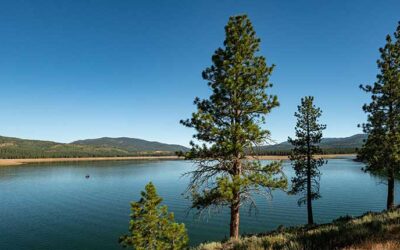
Forestry Reform

RCRC advocates strongly for increasing the pace and scale of forest management on California’s federal public lands.  Most of these areas suffer from extreme overstocking of timber, creating an unhealthy forest that is susceptible to disease, insect infestation, and...

read more

Fish and Wildlife

RCRC member counties have land use and public trust responsibilities over resource-related issues, including fish and wildlife. The California Department of Fish and Wildlife (DFW) and the United States Fish and Wildlife Service (USFWS) are the two primary agencies responsible for fish and wildlife issues impacting rural counties and their citizens.

read more
RCRC Engagement at the CPUC and the Office of Energy Infrastructure Safety

RCRC Engagement at the CPUC and the Office of Energy Infrastructure Safety

Californians have an expectation of safe, affordable, and reliability electricity.  Unfortunately, reliability has suffered greatly over the last several years as utility-caused wildfires and utility bills have increased.

Providing a balanced portfolio of renewable, non-traditional, and traditional resources is needed to ensure that energy is safe, affordable, and reliable.  Careful oversight over utilities, organizational responsiveness, and investment in system hardening and vegetation management will help improve grid safety.

read more
State Regulatory Structure on Hemp

State Regulatory Structure on Hemp

In December 2018, Congress enacted the 2018 Farm Bill, which included provisions that federally legalize hemp in any state that has a regulatory plan meeting a number of conditions (or accedes to a federal plan to be developed by the US Department of Agriculture).

Prior to action by Congress, California voters approved Proposition 64 of 2016, which sanctions the cultivation of industrial hemp, and specifies certain procedures and requirements for cultivators. Growers of industrial hemp and seed breeders must register with the county agricultural commissioner, and industrial hemp may only be grown as a densely planted fiber or oilseed crop, or both, in minimum acreages.

With the enactment of RCRC-supported Senate Bill 1409 (Wilk) in 2018, many state barriers to hemp cultivation were removed by updating the definition of hemp, increasing access to hemp seed, and making appropriate revisions to the administrative provisions of the regulatory scheme. SB 1409streamlines the production of industrial hemp in California, and allows farmers the opportunity to diversify their farm operations. While SB 1409 provided a certain amount of clarity for California’s burgeoning legal hemp industry, the state needs to enact a regulatory scheme that conforms with the 2018 Farm Bill. RCRC is working with key state legislators in the construction of a modest, but important, regulatory structure for the hemp industry. One of the key components for this state regulatory structure is local approval, consistent with the cannabis requirements found in Proposition 64. The regulatory package must also include standards involving testing, labeling and safety for human use.

read more
Employee Relations and Pensions

Employee Relations and Pensions

County Boards of Supervisors and their human resource managers are responsible for the wages and benefits of their employees and other county personnel.  In cases of non-management employees, wages, benefits, and terms of employment are collectively bargained with labor organizations.

read more
Elections

Elections

In all but a handful of jurisdictions, counties are responsible for conducting elections, including those involving candidates and ballot measures for cities and other special districts.  These elections must be conducted under state and federal guidelines.  The elections function is managed through the office of the county elections clerk, who is either independently elected, or appointed by the Board of Supervisors.

Various requirements must be met according to strict time deadlines, and conducting elections is a cost borne by a county’s general fund, with limited reimbursements from either the state or federal government.  In rural counties, absentee or vote by mail balloting is the preferred method in the elections process.

read more
County Finance

County Finance

Counties are required under state and federal law to provide a variety of services to their residents.  To fund the diverse and complex cadre of programs and services, financial resources must be accessible.  The following are the key funding components for counties:...

read more
Cannabis

Cannabis

In 1996, California voters approved Proposition 215 – the Compassionate Use Act – which exempted qualified patients who possess or cultivate marijuana for medical treatment as recommended by a physician and their primary caregivers from criminal laws which otherwise...

read more
Housing and Land Use

Housing and Land Use

California’s rural communities have vast responsibilities with respect to local land use planning, development, conservation, and general decision-making authority. While the State delegates most local land use and development decisions to cities and counties, state and local laws define the process for making planning decisions and requires various planning elements to be prepared and included in a county-adopted General Plan. The General Plan is a comprehensive plan that outlines the county’s goals and policies for accommodating future population growth and other physical demands.

read more
Broadband

Broadband

Broadband deployment in rural California is one of the most critical missing infrastructure components stymieing unserved and   underserved communities from participating in the 21st Century Economy. This absence puts life and safety at risk during emergency situations, places students behind their urban and suburban peers, as well as adds significant costs and barriers to access quality healthcare and other public services. The deployment of new telecommunications technology in rural and remote areas of California and the equitable regulatory treatment of all forms of telecommunications services is a high priority for RCRC.

read more
About CEQA

About CEQA

The California Environmental Quality Act (CEQA) seeks to improve state and local decision making by establishing detailed analytical and public review procedures for projects that may have a significant impact on the environment. Modeled after the federal National Environmental Policy Act (NEPA) of 1969, CEQA establishes a more rigorous review process, requires mitigation of a project’s environmental impacts, and is generally more litigious with lower barriers to challenge decisions.

read more
The AB 32 Scoping Plan

The AB 32 Scoping Plan

Since the passage of AB 32, various state agencies have implemented regulations and programs in an attempt to meet the 2020 goals set forth in the legislation, and the state has since established goals for 2030. The strategies in the AB 32 Scoping Plan have spanned many different sectors, including solid waste, agriculture, land use and transportation planning, forestry, fuels, vehicle emission standards, and large industrial operations such as refineries and cement manufacturers. The state has completed a five-year update of the AB 32 Scoping Plan and has also established the Safeguarding California plan to detail how the state will mitigate the effects climate change will have on California’s communities and ecosystems. RCRC is engaged throughout each update of the AB 32 Scoping Plan, and advocates for the interests of RCRC member counties throughout its implementation.

read more
The History of Climate Change Legislation and Regulations in California

The History of Climate Change Legislation and Regulations in California

The history of climate change legislation and regulations in California dates as far back as 1988, when Assembly Bill 4420 (Sher) became law, and mandated the California Energy Commission to prepare a greenhouse gas (GHG) emissions inventory. The most sweeping climate change legislation was enacted in 2006 – Assembly Bill 32 (Núñez), also known as the California Global Warming Solutions Act. AB 32 mandated the California Air Resources Board (CARB) to formulate and implement a comprehensive GHG emissions reduction plan (referred to as the AB 32 Scoping Plan), including the development of regulations and a cap-and-trade auction, to reduce GHG emissions to 1990 levels by the year 2020. Since the passage of AB 32, climate change mitigation has been a main consideration in much of the resource-related legislation and regulations in California.

read more
RCRC’s 2024 Rural Recap Now Available!

RCRC’s 2024 Rural Recap Now Available!

The Rural Recap is prepared for the RCRC Board of Directors to highlight significant actions taken on issues impacting California’s rural counties. It outlines key advocacy efforts engaged in by RCRC staff on behalf of California’s rural communities and serves as an informational “leave behind” piece during legislative visits and events with other organizations throughout the next year. Read the 2024 Rural Recap here.

The 2024 Rural Recap is available in hardcopy, while supplies last. To request a hardcopy of the Rural Recap, email info@rcrcnet.org, include your name, mailing address, and desired quantity. 

read more
RCRC’s 2024 Rural Recap Now Available!

RCRC’s 2024 Rural Recap Now Available!

The Rural Recap is prepared for the RCRC Board of Directors to highlight significant actions taken on issues impacting California’s rural counties. It outlines key advocacy efforts engaged in by RCRC staff on behalf of California’s rural communities and serves as an informational “leave behind” piece during legislative visits and events with other organizations throughout the next year. Read the 2024 Rural Recap here. 

The 2024 Rural Recap is available in hardcopy, while supplies last. To request a hardcopy of the Rural Recap, email info@rcrcnet.org, include your name, mailing address, and desired quantity. 

read more

They’re Back…

The California State Legislature met in Sacramento on December 2nd to swear in new members, and to hold a Special Session called by Governor Newsom in early November. The Special Session was focused on providing additional funding for legal resources the Governor believes may be necessary for litigation against the incoming Trump Administration. In the Special Session, three measures were introduced, along with one constitutional amendment. Lawmakers also introduced 97 regular session bills. It promises to be a busy start to the year when the 2025-2026 Legislative Session reconvenes on January 6th.

Watch for updates on legislation in the “Bill of the Week” feature, returning to the Barbed Wire in early 2025.

read more

Congressional Committee Updates

In November, U.S. Representative Jared Huffman (D-Marina) announced his intention to bid for the role of Ranking Member on the House Natural Resources Committee. Amid health concerns, current Ranking Member, Raúl Grijalva, will no longer seek to remain in the role. While Grijalva did not endorse Huffman as a successor in his statement, Huffman is expected to prevail with no other members publicly contending for the position. 

 Also in November, Representative Jim Costa (D-Fresno) announced that he would challenge House Agriculture Ranking Member David Scott (D-GA) for the top Democratic position on the committee. Representative Angie Craig (D-MN) is also mounting a bid for the position. Ranking Member Scott has not commented on the challenges for his seat, but it has been reported that several members are privately speculating that he may drop his bid in the coming weeks. 

read more
RCRC’s Barbed Wire on Hiatus for Thanksgiving Holiday

RCRC’s Barbed Wire on Hiatus for Thanksgiving Holiday

Next week, the Barbed Wire will be on hiatus, Friday, November 29th, for the Thanksgiving holiday. The Barbed Wire will return on Friday, December 6th, to bring you the latest legislative and regulatory news impacting California’s rural counties.

read more
USDA Announces More than $2 Billion to Strengthen Specialty Crops Sector, Expand Crop Storage for Producers Following 2024 Natural Disasters

USDA Announces More than $2 Billion to Strengthen Specialty Crops Sector, Expand Crop Storage for Producers Following 2024 Natural Disasters

On November 19, 2024, Agriculture Secretary Tom Vilsack announced the creation of new programs that will help farmers who grow fruits, vegetables, and nuts overcome market barriers for their products, and help producers access necessary pre-market storage for their crops following severe weather events, including recent hurricanes. Specifically, the new Marketing Assistance for Specialty Crops initiative will provide $2 billion to assist specialty crop growers in maintaining a strong domestic supply and expanding market opportunities for their crops. USDA is also creating the Commodity Storage Assistance Program, which will provide $140 million to help producers gain access to a packinghouse, grain elevator, or other facility necessary for the marketing of agricultural commodities. This program is designed for farmers nationwide due to disaster-related challenges. USDA anticipates that applications for both programs will open in December 2024.

read more

Public Review Period Extended for the Draft Environmental Impact Report for GSNR’s Forest Resiliency Project

On November 7, Golden State Finance Authority approved an extension of the public review period for the Draft Environmental Impact Report (DEIR) for Golden State Natural Resources’ (GSNR) proposed forest resiliency demonstration project from 60 days to 90 days to allow additional time for review and comment. This DEIR is a key component of the environmental review process for GSNR’s proposed project, which seeks to enhance California’s forest resiliency by sustainably collecting and processing excess biomass. The 90-day public review period, which began on October 22, 2024, will now conclude on January 20, 2025, offering an opportunity for the community to assess and comment on the report’s findings and recommendations before its finalization.

“GSNR’s proposed project is crucial for advancing forest treatment efforts in California which will strengthen forest resiliency to catastrophic wildfire and safeguard communities,” said GSNR Board Chair and Inyo County Supervisor Matt Kingsley. “We hope this extension will provide the public with even greater opportunity to participate in the DEIR review process and look forward to hearing from the community regarding this important project.”

read more
Padilla Conservation, Public Lands, Wildfire, and Water Bills Advance in Senate

Padilla Conservation, Public Lands, Wildfire, and Water Bills Advance in Senate

On November 19, 2024, U.S. Senator Alex Padilla (D-CA) announced that the Senate Committee on Energy and Natural Resources (ENR) advanced 10 bills he introduced to conserve California public lands, mitigate wildfire risk, expand the use of prescribed fire, strengthen drought resiliency, and support wildlife. The bills, which include the following, will now be considered by the full Senate.

read more

LAO Releases Fiscal Outlook for California’s 2025-2026 Budget

On November 20, 2024, the Legislative Analyst’s Office (LAO) released the annual fiscal outlook for California’s 2025-26 Budget. Legislators took action during the 2024-25 budget process to address an anticipated deficit in the 2025-2026 budget year. While the broader economy has been sluggish, high-income Californians have seen significant income growth, driven significantly by stock market gains. This increase has led to unanticipated income tax revenues; however, the reliance on stock market performance makes the sustainability of this revenue growth uncertain at best. This higher-than-anticipated revenue growth has resulted in a roughly balanced budget for 2025-2026, in the view of the LAO, with a smaller projected deficit of $2 billion. Despite the revenue growth, increased costs and spending still present significant challenges for California’s rural counties. RCRC counties, which often rely on agriculture, tourism, and natural resources may not benefit equally from the income growth seen in their high-income urban counterparts.

While the 2025-2026 budget outlook is considered to be relatively balanced compared to 2024-25, the LAO anticipates very little room for expanding existing programs or funding of new initiatives or programs. Additionally, significant pressures on rural counties in healthcare and social services, areas in which costs continue to rise, could further exacerbate economic disparities in the long-term. RCRC will continue to advocate strongly for the long-term and short-term fiscal needs of our member counties as the 2025-2026 budget process unfolds. The LAO’s Fiscal Outlook for 2025-2026 is available here.

For additional information, contact RCRC Senior Policy Advocate, John Kennedy.

read more
Court Grants RCRC Request to Publish CEQA Case Concerning In-Fill Development in Rural Cities

Court Grants RCRC Request to Publish CEQA Case Concerning In-Fill Development in Rural Cities

On November 18th, California’s Sixth Appellate District Court of Appeal granted a request by RCRC and the California State Association of Counties to publish its decision in Working Families of Monterey County v. King City Planning Commission (Case No. H051232).

In April 2021, Grocery Outlet proposed building a new grocery store in King City. Objecting to the project, a representative of the United Food and Commercial Workers Local 5 challenged the Planning Commission approval and use of a Class 32 CEQA categorical exemption for in-fill development.

read more
EPA Announces Members to the Farm, Ranch and Rural Communities Advisory Committee

EPA Announces Members to the Farm, Ranch and Rural Communities Advisory Committee

On November 13th, U.S. Environmental Protection Agency Administrator Michael S. Regan announced the appointment of 18 new members and reappointment of 6 members to the Farm, Ranch, and Rural Communities Federal Advisory Committee. The FRRCC provides independent policy advice and recommendations to the Administrator on crucial environmental issues affecting agriculture and rural communities. Of note, two members of this Advisory Committee are from RCRC counties. New member, Maria Fernanda Abilgaard (AgroFresh, Fairfield) of Solano County joins existing member, the Honorable Eddie Crandell, Lake County Supervisor and RCRC Board Delegate, on the committee. 

read more
POLICY LEADS