
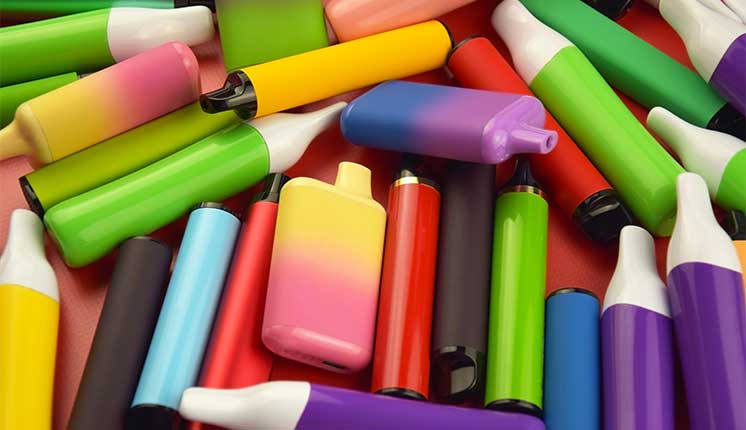
On February 20, Assembly Member Heather Hadwick (R-Alturas) introduced RCRC-sponsored Assembly Bill 2667 regarding vapes.
AB 2667 seeks to protect children, young adults, and the public by: 1) banning disguised vapes and vapes containing video display devices, 2) providing an easier regulatory pathway for schools to properly dispose of vapes confiscated from students, and 3) improving the safe collection, management, and proper disposal of vapes by local household hazardous waste (HHW) collection facilities.
Vapes are ubiquitous, commonly encountered in the waste stream, and must be managed as hazardous waste because they contain residual chemicals, batteries, and electronic components. Additionally, vapes create real public health and safety risks when disguised or improperly disposed and yet are extremely expensive for local governments to manage.
Vapes are increasingly designed and marketed to appeal to minors and young adults – often in ways that are deceptive or intended to increase the level of addiction. Some vapes now contain integrated video games that are intended to increase the user’s interaction with the device. Other vapes are manufactured to be nearly indistinguishable from common school supplies like highlighters and markers, or household items like key fobs, watches, and even hoodies. These attributes pose safety risks for schools and increase the risk of fires in the waste stream, as the devices cannot be easily distinguished from the common household items they are designed to mimic. AB 2667 helps protect children, promote school safety, and increase workplace safety by banning the sale of these disguised and video game devices.
Vapes are now commonly confiscated by schools, from students, and rapidly accumulate in the school setting. As a hazardous waste, there are few transporters and disposal opportunities available, which means it can be very expensive to properly manage and dispose of the contraband. AB 2667 requires the state to evaluate opportunities to increase the safety and convenience for schools to properly dispose of confiscated vapes.
Finally, AB 2667 allows local HHW collection facilities to safely disassemble vapes to separately manage and properly dispose of the cartridges, batteries, and circuitry. It can cost local governments $350 to dispose a single 5-gallon bucket of vapes; however, if HHW collection facilities could disassemble the vapes, it could facilitate the recycling of batteries and circuitry while significantly reducing the cost of managing the consolidated liquid cartridges.
AB 2667 takes a multi-pronged approach to protect public health and safety and reduce costs for schools and local governments to manage vapes.
RCRC’s letter of support is available here and a draft coalition letter of support is available here.
Organizations wishing to sign on to the coalition letter, or for more information, contact RCRC Senior Policy Advocate, John Kennedy.